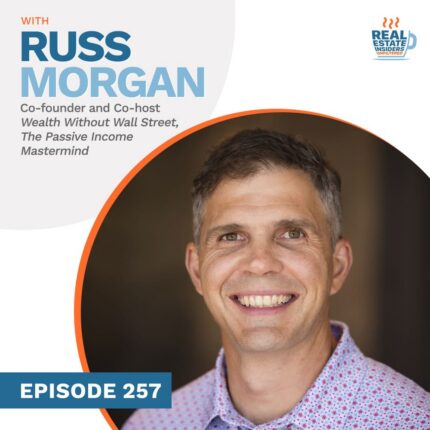
As a real estate agent, it can be easy to focus entirely on active income. Closing transactions, serving clients, managing real estate listings, and building relationships all require time and attention. However, Russ Morgan made an important point on the Real Estate Insiders Unfiltered real estate podcast: income does not necessarily equal freedom.
Hosted by James Dwiggins and Keith Robinson, the episode explores why entrepreneurs, and many professionals in the real estate industry, can become poor investors.
Income Is Not Financial Freedom
Russ defines financial freedom simply: passive income must exceed monthly expenses. That definition challenges the traditional idea of success.
A real estate agent can earn more money while becoming less free. More clients, transactions, and responsibilities can keep an agent constantly connected to a phone. A larger income may create larger obligations without providing control over the calendar.
True freedom means working because the person wants to, not because the person has to.
Why Real Estate Professionals Struggle as Investors
Russ argues that entrepreneurs are often terrible investors because optimism, ego, and excitement can overpower discipline. An entrepreneur may see a promising opportunity and immediately believe that personal effort can make it successful.
That mindset can be risky when evaluating:
- real estate for sale
- real estate investing
- real estate financing
- real estate prices
- real estate trends
- Business or real estate technology opportunities
A good investment requires skepticism. Instead of trusting an enthusiastic pitch, an investor should verify the facts and ask why the opportunity is being presented.
A deal may be legitimate, but that does not mean it belongs in every portfolio.
Build an Investor Buy Box
One of Russ’s most useful lessons is the importance of understanding how each person is wired as an investor. A long-term rental property may be an excellent investment for one person but a poor fit for another.
Russ discovered that he preferred investments he could influence and understand. That realization helped him move toward short-term rentals rather than simply copying another investor’s strategy.
Before investing, a real estate professional should create a personal buy box. This list can define the investment characteristics that matter most. When an opportunity appears, the investor can compare it against that filter instead of making an emotional decision based on fear of missing out.
This approach applies to real estate brokerage, real estate investing for beginners, and real estate investment real estate brokerage decisions.
Mentorship Changes Trajectories
Russ says mentors change trajectories. After the 2008 market crash, he contacted Nelson Nash, read his book, and began learning how to ask better questions.
That lesson matters in every part of the real estate market. A real estate broker does not need to pretend to know everything about real estate taxes, real estate laws, or investment strategy. Finding people who have already done the work can provide valuable perspective.
Useful resources may include real estate blogs, real estate podcasts, real estate books, real estate courses, and real estate events investing communities.
Create a System for Money
Russ emphasizes that people do not rise to the level of their goals; they fall to the level of their systems. A passive income operating system can help organize money as it arrives and direct it toward assets that produce income or reduce monthly expenses.
That system matters whether someone is searching for real estate agents near me, comparing real estate companies near me, considering a real estate franchise, or learning about NextHome and the NextHome real estate franchise.
The goal is not simply to earn more. The goal is to build a sustainable path toward freedom by questioning assumptions, creating a plan, and taking consistent action.