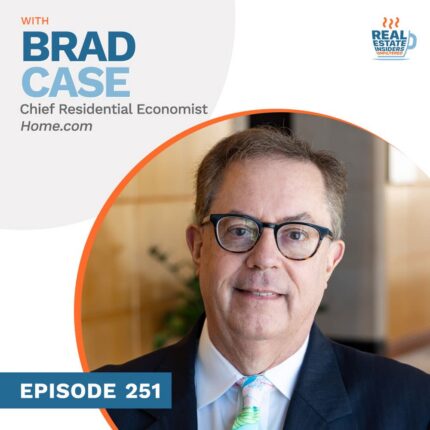
On the latest Real Estate Insiders Unfiltered episode, James Dwiggins interviewed Brad Case, chief residential economist for Homes.com. Their conversation covered interest rates, inflation, tariffs, immigration, war, inventory, and the decisions shaping the real estate industry in 2026.
Brad’s central message was clear: consumers are moving forward because life continues to happen. Growing families, job relocations, divorces, and changing housing needs can matter more than mortgage rates or daily headlines.
For every real estate agent, that is an important reminder. Agents cannot focus only on real estate prices, real estate trends, or real estate listings. They also need to understand the people behind each transaction.
Rates May Stay Higher
Brad believes mortgage rates are more likely to rise than fall, although his best guess is that they will remain near current levels. Federal Reserve decisions matter, but long-term borrowing costs also reflect inflation expectations and broader economic uncertainty.
Agents should not build their businesses around the assumption that rates will quickly return to historically low levels. Buyers and sellers may still act when financing is more expensive because personal circumstances often require a move.
The market is currently slightly stronger than last year, with more inventory, more choices, and increased sales. Some areas are experiencing price weakness because of excess supply, while other markets remain difficult for entry-level buyers.
Immigration, Construction, and Housing Costs
Tariffs can increase the cost of construction materials, including steel, aluminum, cement, and lumber. However, Brad explained that their direct effect on housing has been limited because many materials are heavy, locally sourced, or not widely imported.
Immigration policy has had a larger effect on housing costs because construction is labor intensive. Uncertainty about whether workers can safely reach their jobs makes it harder for builders to maintain a reliable workforce. That pressure can raise construction costs and contribute to higher prices for real estate for sale.
For professionals involved in real estate investing, this is an important consideration. Construction expenses affect development, real estate financing, and the price of new homes. Anyone exploring real estate investing for beginners should understand that policy uncertainty can influence supply as much as demand.
The Practical Lesson for Agents
Brad’s advice to agents was simple: focus on households, not houses.
That means asking better questions:
- Why does the client need to move?
- What kind of home fits the client’s next stage of life?
- Which costs, including real estate taxes and financing, affect the decision?
- How can current real estate laws and market conditions be explained clearly?
- What options exist in the local real estate brokerage market?
A trusted real estate broker, real estate agent, or real estate franchise professional provides value by helping clients make informed decisions, not by promising perfect timing.
Whether consumers search for real estate agents near me, real estate companies near me, real estate blogs, real estate podcasts, real estate books, real estate courses, or real estate events investing, the goal should be practical education.
Moving Forward
The most sustainable strategy for real estate professionals is to remain skeptical, understand the data, and stay focused on service. James Dwiggins and Keith Robinson continue that conversation through the Real Estate Insiders Unfiltered podcast, including discussions about NextHome, the NextHome real estate franchise, and real estate technology. The real estate market may remain unpredictable, but people still need homes. By focusing on people instead of headlines, real estate professionals can help clients move forward while building stronger, more sustainable real estate brokerage businesses.